Projects Research + code
CAR-T vs. CAR-NKT in solid tumors
Following two cell therapies through tissues and time to learn why one of them does better in solid tumors — and which checkpoint each one needs.
- When
- 2022 – 2026
- My role
- Co-first author; led the single-cell and transcriptomic analyses
- Built with
- scRNA-seq, scTCR-seq, Seurat, Scanpy, R, Python
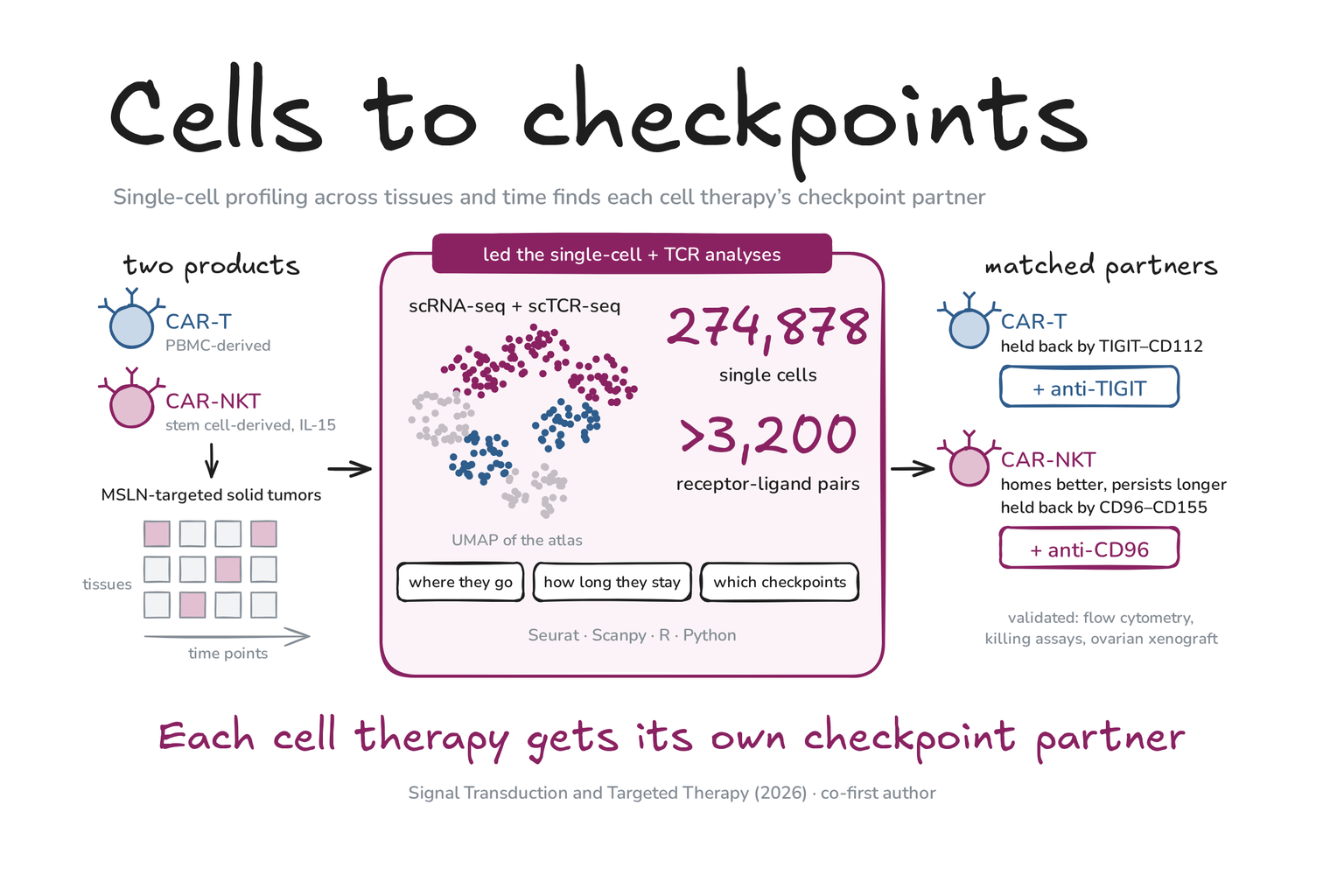
- Homing CAR-NKT cells infiltrated and localized in tumors better
- Persistence CAR-NKT cells lasted longer in vivo
- TIGIT vs CD96 a different checkpoint partner for each product
Project introduction
The question
CAR-T cells transform some blood cancers but struggle in solid tumors, where they infiltrate poorly and meet a hostile microenvironment. Invariant NKT cells home to tissues naturally and can reshape that environment, which makes allogeneic, stem cell-derived CAR-NKT cells an attractive alternative. We wanted to know how the two actually behave inside the body.
What I did
I led the single-cell RNA and TCR sequencing analyses, profiling conventional CAR-T cells and IL-15-enhanced CAR-NKT cells across multiple tissues and time points in solid-tumor models: where each product goes, how long it stays, and which gene programs and checkpoint receptors it switches on inside tumors.
What we found
The two products had distinct pharmacokinetic, pharmacodynamic, and immunoregulatory profiles. CAR-NKT cells homed to, infiltrated, and localized within tumors better and persisted longer, with their own checkpoint-receptor landscape. That landscape pointed to different combinations: CAR-T cells worked synergistically with TIGIT blockade, while CAR-NKT cells were more sensitive to CD96 blockade.
Why it matters
Cell therapies are not interchangeable, and neither are their combination partners. Profiling them in space and time gives a rational way to pair each product with the checkpoint therapy most likely to help it.